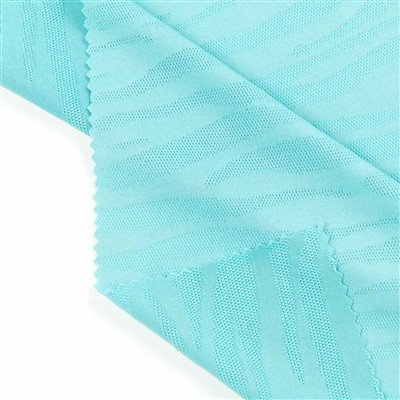
Hey there! As a supplier of Jacquard cloth, I often get asked about all sorts of technical details. One question that pops up quite a bit is, "What is the weft density of Jacquard cloth?" Well, let's dive right into it and break it down in a way that's easy to understand.
First off, let's talk about what weft density actually means. In simple terms, the weft density refers to the number of weft yarns per unit length in a piece of fabric. The weft yarns are the ones that run horizontally across the fabric, perpendicular to the warp yarns which run vertically. It's an important factor because it can greatly affect the look, feel, and performance of the Jacquard cloth.


Jacquard cloth is known for its intricate and detailed patterns, which are created using a special weaving technique. The weft density plays a crucial role in how these patterns turn out. A higher weft density generally means that there are more yarns packed closely together, resulting in a denser and more tightly woven fabric. This can make the patterns appear sharper and more defined, and it can also give the fabric a smoother and more luxurious feel.
On the other hand, a lower weft density means there are fewer yarns, and the fabric will be less dense. This can create a more open and airy feel, and the patterns might be a bit softer and less distinct. It all depends on the effect you're going for and the specific application of the Jacquard cloth.
So, how do you determine the right weft density for your Jacquard cloth? Well, it really depends on a few factors. One of the main things to consider is the type of pattern you want to create. If you're going for a detailed and complex design, a higher weft density might be necessary to ensure that all the details come out clearly. For more simple or abstract patterns, a lower weft density could work just fine.
Another factor is the intended use of the fabric. If you're making something like a formal dress or a high - end upholstery, you might want a higher weft density for a more refined look and better durability. But if it's for something like a casual summer top or a lightweight curtain, a lower weft density could be more appropriate.
Let's take a look at some common weft density ranges for Jacquard cloth. In general, weft densities can range from around 50 to 200 yarns per inch. For very lightweight and sheer Jacquard fabrics, you might see weft densities on the lower end of this range, say around 50 - 80 yarns per inch. These fabrics are great for things like scarves or lingerie.
For medium - weight fabrics that are suitable for blouses, shirts, and some light - duty upholstery, the weft density might be in the range of 80 - 120 yarns per inch. This gives a good balance between pattern definition and fabric drape.
If you're looking for a heavy - duty Jacquard cloth for things like coats, suits, or high - traffic upholstery, you'll probably want a weft density of 120 - 200 yarns per inch. These fabrics are more durable and can withstand more wear and tear.
Now, at our company, we offer a wide range of Jacquard cloth with different weft densities to meet the diverse needs of our customers. Whether you're a fashion designer looking for the perfect fabric for your next collection or an interior decorator in search of a statement - making upholstery fabric, we've got you covered.
We also have some other great fabric options in our catalog. For example, we have the Nylon Polyester Spandex Striped Fabric. This fabric is a great choice for activewear or casual clothing, as it combines the stretch of spandex with the durability of nylon and polyester.
Another option is the 100% Polyester Herringbone Fabric. It has a classic herringbone pattern and is perfect for making warm and stylish winter coats or jackets.
And if you're a fan of cotton, we have the 100% Cotton Fleece Fabric. This soft and cozy fabric is ideal for making loungewear, baby clothes, and more.
In conclusion, the weft density of Jacquard cloth is a key factor that can have a big impact on the final look and performance of the fabric. By understanding how it works and choosing the right density for your project, you can create amazing products that stand out.
If you're interested in learning more about our Jacquard cloth or any of our other fabrics, or if you want to start a procurement discussion, don't hesitate to reach out. We're always happy to help you find the perfect fabric for your needs.
References
- Textile Institute. Handbook of Textile Technology.