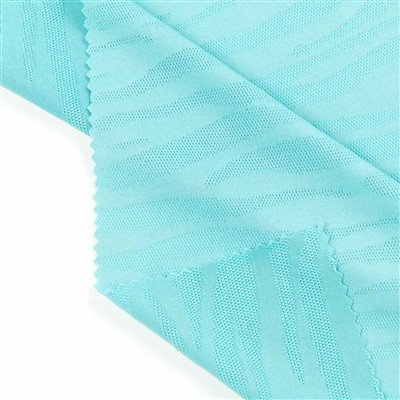
As a supplier of Jacquard Cloth, I've had numerous discussions with clients about the differences between Jacquard wool and regular wool. This blog post aims to shed light on these disparities, helping you make informed decisions when it comes to fabric selection.


Composition and Manufacturing Process
Regular wool is sourced from sheep and other wool - bearing animals. The raw wool is first cleaned to remove dirt, grease, and other impurities. Then, it undergoes carding to align the fibers in parallel, followed by spinning to transform the fibers into yarn. This yarn can be used directly for knitting or weaving into various fabrics.
On the other hand, Jacquard wool is a type of wool fabric that is created using a Jacquard loom. The term "Jacquard" refers to a complex weaving technique that allows for the creation of intricate patterns directly into the fabric during the weaving process. While the base material is still wool, the manufacturing process of Jacquard wool is more elaborate. The Jacquard loom uses a system of punched cards or modern electronic controls to manipulate individual warp threads, enabling the production of highly detailed and often large - scale patterns. This is in contrast to regular wool fabrics, which may have simpler patterns or be plain, achieved through basic weaving or knitting techniques.
Aesthetic Appeal
One of the most obvious differences between Jacquard wool and regular wool lies in their appearance. Regular wool fabrics typically have a more uniform and simple look. They can be solid - colored or have basic stripes or checks created by simple weaving methods. For example, a classic wool sweater in a single color or a wool suit with a simple pinstripe pattern falls into the category of regular wool.
Jacquard wool, however, offers a world of visual possibilities. The Jacquard weaving technique can produce incredibly detailed and complex patterns, ranging from floral motifs, geometric designs to even pictorial representations. These patterns are an integral part of the fabric, not added through printing or embroidery. As a result, Jacquard wool fabrics have a rich, three - dimensional look that can add a touch of luxury and sophistication to any garment or home textile. For instance, a Jacquard wool blanket with an elaborate paisley pattern can become the centerpiece of a living room, while a Jacquard wool suit can make a strong fashion statement.
Durability and Performance
When it comes to durability, both Jacquard wool and regular wool have their strengths. Wool, in general, is a resilient fiber. It has natural elasticity, which means it can stretch and return to its original shape without losing its form. Regular wool fabrics, with their simpler weaving structures, tend to be more flexible and breathable. They are often used in everyday clothing items like sweaters and scarves, where comfort and ease of movement are important.
Jacquard wool, due to its more complex weaving pattern, may have a slightly different performance profile. The interlacing of the warp threads in the Jacquard process can sometimes make the fabric denser in areas with more pattern complexity. This can enhance the fabric's durability in those areas, making it more resistant to wear and tear. However, it may also make the fabric a bit stiffer compared to regular wool, especially in the initial stages. With proper care, though, Jacquard wool can maintain its quality and appearance for a long time.
Applications
Regular wool has a wide range of applications. It is commonly used in the production of everyday clothing, such as sweaters, socks, hats, and gloves. Its comfort and warmth make it a popular choice for winter wear. In the home textile industry, regular wool can be found in items like blankets, throws, and carpets.
Jacquard wool, with its unique aesthetic appeal, is often used in more high - end and formal applications. In the fashion industry, it is a favorite for creating elegant suits, evening gowns, and formal jackets. Designers appreciate the ability to create one - of - a - kind patterns that can set their collections apart. In the home decor sector, Jacquard wool fabrics are used for upholstery, curtains, and decorative pillows. A Jacquard wool - upholstered sofa can add a touch of opulence to a living room, while Jacquard wool curtains can create a luxurious atmosphere.
Cost
The cost of Jacquard wool is generally higher than that of regular wool. This is mainly due to the more complex manufacturing process involved in creating Jacquard fabrics. The Jacquard loom requires specialized skills to operate, and the production speed is often slower compared to basic weaving methods used for regular wool. Additionally, the ability to create unique and detailed patterns adds value to the fabric.
Regular wool, with its simpler production process and more common availability, is usually more affordable. This makes it a practical choice for mass - market products and everyday use. However, the price difference also reflects the different levels of quality and aesthetic value offered by the two types of wool.
Related Products in Our Catalog
In addition to our Jacquard wool products, we also offer a variety of other high - quality fabrics. For those interested in different textures and styles, we recommend checking out our Faux Brocade Spandex Single Jersey. This fabric combines the look of brocade with the stretch and comfort of spandex, making it suitable for a range of clothing applications.
Our Dobby Stripe Single Fabric is another option. It features a unique stripe pattern created by the dobby weaving technique, adding a touch of style to any project.
For those looking for a fabric with added benefits, our Collagen knitted fabric is worth considering. The inclusion of collagen in the fabric offers potential skin - friendly properties, along with the comfort of a knitted structure.
Conclusion
In summary, the difference between Jacquard wool and regular wool is significant in terms of composition, appearance, performance, applications, and cost. Regular wool is a versatile and affordable option for everyday use, while Jacquard wool offers a higher level of aesthetic appeal and is often used in more formal and high - end applications.
If you are interested in our Jacquard Cloth products or any of the other fabrics mentioned in this blog, we encourage you to reach out to us for further information and to discuss your specific requirements. We are committed to providing high - quality fabrics and excellent customer service, and we look forward to the opportunity to work with you.
References
- Textile Institute. Handbook of Textile Fibres. Woodhead Publishing, 2019.
- Lewis, M. J. The Technology of Wool Production. Elsevier, 2017.