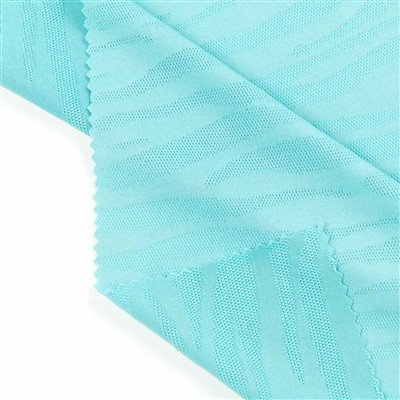
As a seasoned supplier of knitted fabrics, I've witnessed firsthand the challenges that static electricity can pose in the textile industry. Static cling not only affects the comfort of the end - user but can also create difficulties during the manufacturing and handling processes. In this blog, I'll share some effective strategies on how to make knitted fabrics more static - resistant.
Understanding the Causes of Static in Knitted Fabrics
Before delving into solutions, it's essential to understand why static electricity builds up in knitted fabrics. Static is generated when two materials rub against each other, causing electrons to transfer from one material to the other. In the case of knitted fabrics, factors such as the type of fiber, humidity levels, and the presence of synthetic materials can contribute to static buildup.
Synthetic fibers like polyester and nylon are more prone to static than natural fibers because they are insulators. They do not conduct electricity well, so the electrons that are transferred during friction accumulate on the surface of the fabric, creating a static charge. Low humidity also exacerbates the problem, as moisture in the air helps to dissipate static electricity.
Choosing the Right Fibers
One of the most fundamental ways to reduce static in knitted fabrics is to select the appropriate fibers. Natural fibers such as cotton, wool, and silk are less likely to generate static compared to synthetic fibers. Cotton, for example, is a highly breathable fiber that can absorb moisture from the air, which helps to dissipate static charges.
However, in some cases, a combination of natural and synthetic fibers may be desired for properties such as durability, stretch, and quick - drying. In such instances, blending natural fibers with anti - static synthetic fibers can be an effective solution. Some manufacturers produce synthetic fibers that are treated with anti - static agents during the spinning process. These fibers can be incorporated into the knitted fabric to reduce static.
For instance, our Polyester Spandex Quick Dry Fabric is a great option. It combines the quick - drying properties of polyester with the stretch of spandex. By using anti - static treated polyester in the blend, we've managed to significantly reduce static buildup while maintaining the fabric's performance characteristics.


Anti - Static Finishes
Applying anti - static finishes to knitted fabrics is another popular method to make them more static - resistant. These finishes work by either conducting the static charge away from the fabric or by attracting moisture to the surface of the fabric, which helps to dissipate the charge.
There are two main types of anti - static finishes: topical and permanent. Topical finishes are applied to the surface of the fabric after it has been knitted. They are relatively easy to apply but may wear off over time with repeated washing. Permanent finishes, on the other hand, are incorporated into the fiber during the manufacturing process. They offer long - lasting anti - static properties but may be more expensive to produce.
When choosing an anti - static finish, it's important to consider the end - use of the fabric. For fabrics that will be washed frequently, such as clothing, a permanent finish may be more suitable. For fabrics used in less - washed applications, like upholstery, a topical finish may be sufficient.
Controlling the Manufacturing Environment
The manufacturing environment can also have a significant impact on the static properties of knitted fabrics. Maintaining proper humidity levels in the production facility is crucial. By keeping the humidity between 40% and 60%, the air can help to dissipate static charges as they are generated during the knitting process.
Using anti - static equipment is also important. For example, anti - static brushes can be used to clean the knitting machines, and anti - static mats can be placed on the floors to prevent static buildup on workers' shoes. Additionally, grounding the knitting machines can help to conduct any static charges away from the equipment and the fabric.
Incorporating Conductive Elements
In some high - tech applications, incorporating conductive elements into knitted fabrics can be an effective way to reduce static. Conductive fibers such as carbon fibers or metal - coated fibers can be knitted into the fabric to create a conductive path for the static charge to flow.
These conductive elements can be used in small amounts without significantly affecting the appearance or feel of the fabric. For example, a small percentage of carbon fibers can be added to a knitted fabric to create a static - dissipating effect. This is particularly useful in applications where static electricity can cause problems, such as in electronics manufacturing or cleanroom environments.
Post - Treatment Processes
After the fabric has been knitted, post - treatment processes can be used to further enhance its anti - static properties. One such process is annealing, which involves heating the fabric to a specific temperature and then cooling it slowly. This process can help to realign the fibers in the fabric, reducing the likelihood of static buildup.
Another post - treatment option is plasma treatment. Plasma is a highly ionized gas that can be used to modify the surface properties of the fabric. By treating the fabric with plasma, the surface becomes more hydrophilic, which means it can attract and hold moisture better. This helps to dissipate static charges more effectively.
Testing and Quality Control
To ensure that the knitted fabrics are truly static - resistant, it's important to conduct regular testing. There are several methods available for testing static properties, such as measuring the surface resistance of the fabric or the amount of static charge generated during friction.
By implementing a strict quality control system, we can ensure that all our knitted fabrics meet the required anti - static standards. This not only gives our customers peace of mind but also helps us to maintain our reputation as a reliable supplier. For example, our Concave and Convex Jacquard Fabric undergoes rigorous static testing to ensure its performance.
Conclusion
Making knitted fabrics more static - resistant is a multi - faceted process that involves choosing the right fibers, applying anti - static finishes, controlling the manufacturing environment, and incorporating conductive elements. By implementing these strategies, we can produce knitted fabrics that are not only comfortable for the end - user but also easier to handle during the manufacturing process.
If you're in the market for high - quality, static - resistant knitted fabrics, we'd love to hear from you. Whether you need a specific type of fabric for your clothing line, upholstery project, or industrial application, we have the expertise and products to meet your needs. Contact us to start a discussion about your requirements and explore how our knitted fabrics can add value to your business.
References
- Textile Chemistry and Physics, by Robert H. Peters
- Handbook of Fiber Science and Technology, edited by Menachem Lewin and Eli M. Pearce
- Static Electricity in Industry: Detection, Prevention, and Control, by D. A. Jenkins