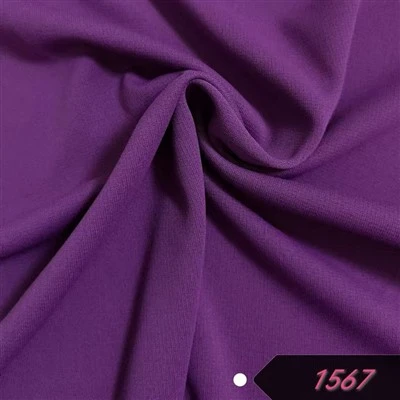
Polyamide Elastane Tricot Fabric is a warp-knitted stretch textile made from polyamide (nylon) and elastane yarns. It is used in apparel manufacturing where a smooth surface, fabric flexibility, and close-fitting construction are required. Typical applications include activewear, swimwear, sports bras, leggings, and stretch underwear.
Polyamide provides the main textile structure, while elastane contributes stretch. The finished fabric's elasticity, recovery, opacity, and surface properties depend on yarn specifications, knitting construction, fabric weight, dyeing, and finishing. This fabric can be specified by weight, usable width, color, and finishing requirements.
Key Features
Warp-Knitted Tricot Construction
The tricot structure provides a knitted fabric construction with a relatively smooth face. Surface appearance, drape, and stretch behavior vary with the knitting pattern and finishing process.
Polyamide and Elastane Composition
The combination of nylon and elastane is suitable for garments requiring flexibility and a close fit. Actual stretch and recovery performance should be evaluated using test results for the selected fabric specification.
Multiple Weight Options
A proposed supply range of 140–260 g/m² covers different fabric-weight requirements. Buyers should select the weight according to garment coverage, support requirements, drape, and intended use.
Dyeing and Finishing Options
Color matching and functional finishing can be discussed according to order requirements. Moisture management, antibacterial performance, ultraviolet protection, and chlorine resistance should only be specified when supported by the applicable product data or test reports.
Technical Specifications
|
Parameter |
Specification |
|
Fabric Name |
Polyamide Elastane Tricot Fabric |
|
Fiber Composition |
80% Polyamide / 20% Elastane |
|
Fabric Construction |
Warp-knitted tricot |
|
Fabric Weight |
140–260 g/m² |
|
Usable Width |
147–152 cm (58–60 in) |
|
Bursting Strength |
≥350 kPa |
|
Color Fastness to Washing |
Grade 4–5 |
|
Color Fastness to Perspiration |
Grade 4–5, acidic and alkaline |
|
Composition Test Method |
ISO 1833 |
|
Fabric Mass Test Method |
ISO 3801 |
|
Width Measurement |
ISO 22198 |
|
Bursting Strength Test |
ISO 13938-1 |
|
Washing Color Fastness Test |
ISO 105-C06 |
|
Perspiration Color Fastness Test |
ISO 105-E04 |
Applications
Activewear and Fitness Apparel
Suitable for evaluating in fitted tops, leggings, sports bras, and cycling garments where stretch and surface appearance are important. Fabric weight, opacity, and recovery should be checked against the garment design.
Swimwear
Can be considered for swimwear development when the selected construction and finishing meet the required stretch, coverage, and exposure conditions. Chlorine resistance and long-term shape retention require separate verification.
Yoga and Studio Apparel
Potential uses include fitted tops, stretch bottoms, and movement-oriented garments. Buyers should assess stretch in both directions, recovery after repeated extension, and opacity at the intended garment dimensions.
Intimates and Shapewear
The fabric may be evaluated for underwear panels and close-fitting garments. Compression level and support cannot be inferred from composition alone; they depend on fabric structure, elastic behavior, pattern design, and garment construction.
Available Configurations
Weight and Width: Fabric can be specified by target GSM and usable width, subject to available production specifications.
Color Matching: Buyers can provide physical swatches or color references, including Pantone TCX or TPG codes, for color-matching assessment. Final acceptance should use agreed color tolerances and evaluation conditions.
Functional Finishing: Moisture-wicking, antibacterial, UV-protective, and chlorine-resistant finishes can be discussed where technically available. Applicable performance claims require supporting test evidence.
Packaging: Roll packaging can be specified according to transportation and storage requirements. Core dimensions, roll length, protective wrapping, and outer packaging should be agreed before order confirmation.
Frequently Asked Questions
Q: What information is needed for a quotation?
A: Provide the target weight, usable width, fiber composition, color, intended application, estimated order quantity, and any required performance standards.
Q: Can the fabric be customized for swimwear or activewear?
A: Customization can be evaluated based on the required construction, weight, color, and finishing. Confirm the necessary stretch, recovery, opacity, and exposure resistance before bulk production.
Q: How is color consistency evaluated?
A: Color approval should be based on an agreed physical sample or color reference. Buyers can specify an acceptable color difference and request relevant inspection records where available.
Q: Can testing reports and certificates be provided?
A: Available documents depend on the actual product, production batch, and valid certification scope. Confirm the required test reports and certifications before ordering.
Request a Quote
To evaluate Polyamide Elastane Tricot Fabric for your production needs, send your target GSM, usable width, color reference, intended garment, estimated quantity, and required performance criteria. Include any applicable testing standards or certification requirements.
These details help establish the appropriate fabric specification and clarify the information needed for sample evaluation and bulk-order quotation.
Hot Tags: polyamide elastane tricot fabric, China polyamide elastane tricot fabric manufacturers, suppliers, factory, 4 way stretch polyester spandex fabric, 9000 micro velvet, cotton poly blend twill, cotton velvet fabric by the yard, knitted plaids, spandex fabric