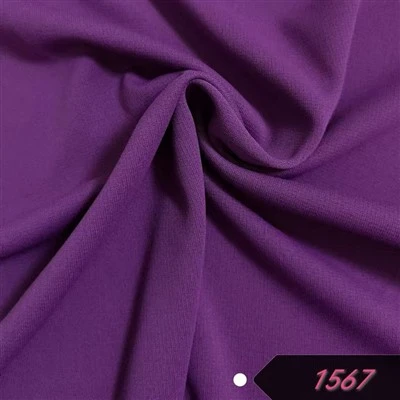
Viscose spandex stretch knit fabric is engineered for garment applications requiring fluid drape, skin-friendly breathability, and reliable multi-directional recovery. Constructed using ring-spun viscose yarns combined with elastane filaments on high-gauge circular knitting machines, this textile balances natural cellulose comfort with mechanical elasticity. The integration of spandex prevents permanent deformation during wear, while the viscose matrix delivers high moisture regain and a smooth surface texture suitable for direct-to-skin apparel.
Key Features
Soft Hand Feel and Fluid Drape
Viscose-based yarns provide a smooth surface and a flexible drape suitable for garments worn directly against the skin. The final hand feel depends on yarn characteristics, knitting structure, dyeing, and finishing.
Stretch for Fitted Garments
Elastane adds extensibility to the knitted structure. Actual stretch and recovery depend on elastane content, yarn arrangement, fabric construction, and finishing conditions. Buyers requiring specific performance should define the required stretch direction and recovery test method.
Moisture Absorption
Viscose fibers have moisture-absorbing properties that can support comfort in everyday apparel. Moisture absorption should not be confused with engineered moisture-wicking performance, which depends on the fabric structure and any functional finishing applied.
Multiple Knitting Structures
Single jersey suits lightweight tops and dresses, rib knit is commonly selected for fitted garments and stretch panels, and interlock provides a double-knit structure with a comparatively stable, smooth surface. Final suitability depends on the selected construction and garment pattern.
Technical Specifications
|
Parameter |
Specification |
|
Product Type |
Viscose Spandex Stretch Knit Fabric |
|
Fiber Composition |
90%–95% viscose / 5%–10% spandex |
|
Knitting Structure |
Single jersey, rib knit, interlock |
|
Fabric Weight |
140–280 GSM |
|
Finished Width |
160–180 cm |
|
Delivery Form |
Open width or tubular |
|
Color |
Solid dyed; custom colors |
|
Finishing Options |
Softening; additional functional finishes where available |
|
Dimensional Stability |
Shrinkage ≤ ±5% (AATCC 135 / ISO 6330) |
|
Color Fastness |
Grade 4 or above (Washing & Perspiration, ISO 105) |
|
Compliance Documentation |
Available documents must correspond to the supplied fabric and applicable requirements |
Applications
T-Shirts and Fitted Tops: Single jersey constructions can be considered for short-sleeve T-shirts, long-sleeve tops, and close-fitting casual garments where softness and stretch are required.
Dresses and Fashion Apparel: Viscose stretch knits are suitable for garment designs that use fluid drape and body-contouring silhouettes. Weight and structure should be selected according to the desired opacity and garment shape.
Underwear and Loungewear: Soft knitted surfaces and elastane content make this fabric a candidate for sleepwear, lounge sets, and selected intimate apparel. Buyers should assess skin-contact requirements, recovery, and wash performance.
Ribbed Garments and Panels: Rib knit options can be used for fitted tops, cuffs, necklines, and other garment sections requiring stretch. The finished rib dimensions and recovery should be checked against the garment pattern.
Customization and Quality Requirements
When requesting a quotation, specify the target composition, GSM, finished width, knitting structure, color, and estimated order quantity. Where stretch performance is important, include the required extension and recovery criteria, along with the relevant test method.
Custom dyeing, open-width or tubular delivery, and selected finishing options can be discussed according to actual production capability. Color approval should be based on an agreed physical standard or approved lab dip. Lead time and minimum order quantity should be confirmed for the requested color, fabric construction, order volume, and finishing process.
For quality evaluation, buyers should review fabric weight, width, appearance, shade consistency, and dimensional change after washing. Additional checks, such as pilling resistance or stretch recovery, can be included when required by the intended garment application. Any stated test result or certification should be supported by documentation applicable to the supplied product.
Frequently Asked Questions
Q: What is the difference between viscose spandex jersey and rib knit?
A: Single jersey has a relatively smooth face and is commonly used for tops and dresses. Rib knit has alternating knit and purl columns that create a ribbed appearance and different stretch behavior. Selection depends on garment design and required fit.
Q: Can the fabric be produced in custom colors and weights?
A: Custom requirements can be evaluated based on available yarns, knitting structures, dyeing processes, and production capacity. Confirm the target GSM, width, color standard, and quantity before sampling.
Q: What information is needed for a quotation?
A: Provide the composition, knitting structure, GSM, finished width, color, quantity, intended application, and any required test or compliance documents. A physical sample or technical specification can help clarify performance requirements.
Request a Quote
Send your target fabric specifications, sample requirements, and estimated order quantity for a product review and quotation.
Email: 8837042@qq.com
Phone / WeChat: +86 15005105377
Hot Tags: viscose spandex stretch knit fabric, China viscose spandex stretch knit fabric manufacturers, suppliers, factory, 78 nylon 22 spandex fabric, cow print lycra fabric, heavy duty polyester thread, lycra viscose fabric, polyester dty, silver lycra fabric