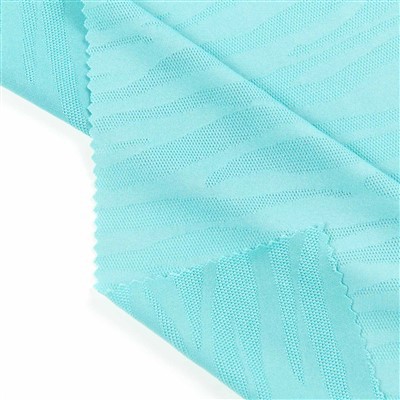
Terry cloth is a well - recognized textile in the fabric industry, known for its softness, absorbency, and durability. As a supplier of terry cloth, I've had the privilege of exploring its many properties, with one of the most fascinating being its water - holding capacity.
The Structure of Terry Cloth and Water - Holding
To understand the water - holding capacity of terry cloth, we first need to look at its unique structure. Terry cloth consists of loops of yarn that are raised from the base fabric. These loops are what give terry cloth its characteristic texture and play a crucial role in its water - holding ability.
The loops create numerous small pockets and capillary channels within the fabric. When the terry cloth comes into contact with water, these pockets and channels work like tiny reservoirs. The water is drawn into the fabric through capillary action, a process by which liquids flow into narrow spaces without the assistance of, or in opposition to, external forces like gravity. The more loops a terry cloth has, the more surface area is available for water to adhere to and be stored within the fabric.
The material used to make the terry cloth also affects its water - holding capacity. Cotton is the most common material for terry cloth, and it has excellent hydrophilic properties, meaning it has a strong affinity for water. Cotton fibers can absorb water up to 27 times their own weight. This is due to the presence of hydroxyl groups in the cellulose structure of cotton, which can form hydrogen bonds with water molecules.
Measuring the Water - Holding Capacity
There are several methods to measure the water - holding capacity of terry cloth. One common approach is the immersion method. In this method, a sample of terry cloth is first weighed in its dry state. Then, it is fully immersed in water for a specific period, usually around 10 - 15 minutes, to ensure complete saturation. After that, the excess water is removed by gently squeezing the fabric, and the wet fabric is weighed again. The difference between the wet weight and the dry weight represents the amount of water absorbed by the fabric.
Another method is the drip - absorption test. In this test, a fixed volume of water is dropped onto the surface of the terry cloth, and the time it takes for the water to be fully absorbed is measured. A shorter absorption time indicates a higher water - holding capacity and better absorbency.
Factors Affecting Water - Holding Capacity
Several factors can influence the water - holding capacity of terry cloth.


Loop Height and Density
The height and density of the loops on the terry cloth are key factors. Longer loops generally provide more space for holding water. However, if the loops are too long, they may collapse under the weight of the water, reducing the effective water - holding area. Similarly, a higher loop density means more surface area for water absorption, but it can also make it more difficult for the water to penetrate the fabric if the spaces between the loops are too small.
Weave Pattern
The weave pattern of the base fabric also affects water - holding capacity. A tight weave can provide better support for the loops, preventing them from collapsing and allowing the fabric to hold more water. On the other hand, a looser weave may make it easier for water to penetrate the fabric initially, but it may not provide sufficient support for holding water in the long run.
Chemical Treatments
Chemical treatments can either enhance or reduce the water - holding capacity of terry cloth. For example, some hydrophobic treatments are applied to terry cloth to make it water - repellent, which obviously reduces its water - holding capacity. In contrast, treatments that improve the hydrophilicity of the fabric, such as certain finishes that increase the number of water - attracting groups on the fiber surface, can enhance water - holding.
Applications of Terry Cloth Based on Water - Holding Capacity
Towels
One of the most common applications of terry cloth is in towels. The high water - holding capacity of terry cloth makes it ideal for drying bodies after bathing or swimming. A good quality terry cloth towel can quickly absorb large amounts of water from the skin, leaving the body dry and comfortable. Whether it's a bath towel, a beach towel, or a hand towel, the ability to hold water is a critical factor in its performance.
Cleaning Cloths
Terry cloth is also widely used as cleaning cloths. Its water - holding capacity allows it to pick up and hold dirt and moisture, making it effective for cleaning various surfaces. For instance, in a kitchen, a terry cloth can absorb spills and clean countertops by holding the water and dirt within its fibers. In a bathroom, it can be used to clean tiles and mirrors, removing water and stains efficiently.
Medical and Hygiene Products
In the medical field, terry cloth is used in products such as wound dressings. The high water - holding capacity helps to keep the wound moist, which is beneficial for the healing process. It can also absorb exudate from the wound, preventing infection and promoting a clean environment for healing.
Our Terry Cloth Offerings and Related Fabrics
As a terry cloth supplier, we offer a wide range of terry cloth products with different water - holding capacities to meet the diverse needs of our customers. In addition to terry cloth, we also supply other high - quality fabrics. For example, we have the Fine Striped Brushed Fabric, which is known for its soft texture and unique appearance. The Birdseye knit fabric is another great option, offering good breathability and durability. And if you're looking for a fabric with an interesting pattern, our Fine Striped Polka Dot Fabric is a perfect choice.
Contact for Procurement
Whether you're in the business of manufacturing towels, cleaning products, or medical supplies, our terry cloth and other fabrics can meet your requirements. We are dedicated to providing high - quality products with excellent water - holding capacity and other properties. If you're interested in our products, please feel free to contact us for procurement discussions. We look forward to cooperating with you and providing you with the best fabric solutions.
References
- Textile Science: Fundamentals and Advances, Third Edition by David J. Vaughn.
- Handbook of Textile Fibre Structure, Volume 1: Natural Fibres by J. E. McIntyre.
- Cotton: Science and Technology by Peter J. Wakelyn.