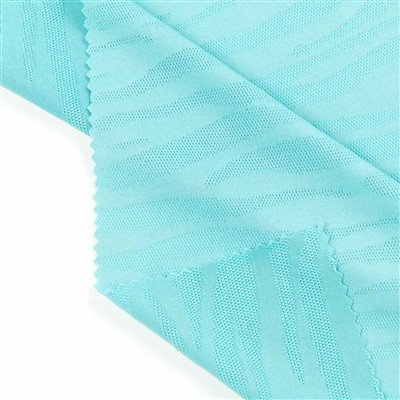
Elasticity is a fundamental property in the world of fabrics, especially when it comes to double - sided fabrics. As a supplier of double - sided fabrics, I've witnessed firsthand the importance of understanding the elasticity of these unique materials. In this blog, we'll delve deep into what the elasticity of double - sided fabric means, its influencing factors, and its practical implications in various applications.
Understanding Elasticity in Double - Sided Fabrics
Elasticity in fabrics refers to the ability of the material to stretch under the application of force and then return to its original shape once the force is removed. For double - sided fabrics, this property is crucial as it affects how the fabric drapes, fits, and performs in different settings.
Double - sided fabrics are unique in that they have two distinct sides, each with its own set of characteristics. The elasticity of a double - sided fabric can vary depending on whether you're stretching it along the length (warp direction) or the width (weft direction). This anisotropy in elasticity is a result of the way the fabric is constructed, including the type of fibers used, the knitting or weaving pattern, and the finishing processes.
Factors Influencing the Elasticity of Double - Sided Fabrics
Fiber Type
The choice of fibers is one of the most significant factors affecting the elasticity of double - sided fabrics. Natural fibers like cotton and silk generally have limited elasticity on their own. However, when blended with elastic fibers such as spandex or elastane, the fabric can gain significant stretchability. For example, a double - sided fabric made from a cotton - spandex blend will have more give compared to a pure cotton double - sided fabric.
Synthetic fibers, on the other hand, can offer different levels of elasticity. Polyester is a commonly used synthetic fiber in double - sided fabrics. It provides some degree of stretch, especially when combined with other fibers. The Double Chenille Polyester Fabric is a great example. Its polyester composition gives it a certain level of flexibility, making it suitable for a variety of applications where some stretch is required.
Knitting or Weaving Pattern
The way the fabric is knitted or woven also plays a crucial role in determining its elasticity. In knitting, different stitch patterns can create varying degrees of stretch. For instance, a jersey stitch is known for its good stretch in both the warp and weft directions, while a rib stitch has more stretch in the width direction.
Weaving patterns can also affect elasticity. A plain weave, which is the simplest and most common weave, generally has less stretch compared to a twill or satin weave. In double - sided woven fabrics, the combination of different weaves on each side can result in unique elasticity properties.
Finishing Processes
Finishing processes can enhance or reduce the elasticity of double - sided fabrics. Heat setting is a common finishing process that can stabilize the fabric's shape and reduce its tendency to stretch. On the other hand, some chemical treatments can increase the fabric's stretchability. For example, a fabric treated with a softening agent may become more pliable and have better stretch characteristics.
Measuring the Elasticity of Double - Sided Fabrics
There are several methods to measure the elasticity of double - sided fabrics. One of the most common methods is the strip test. In this test, a strip of fabric is cut in both the warp and weft directions. The strip is then clamped at both ends and stretched using a tensile testing machine. The machine measures the force required to stretch the fabric to a certain length and the amount of recovery when the force is removed.
Another method is the loop test. In this test, a loop of fabric is formed, and a weight is hung from the loop. The amount of stretch and the recovery of the loop are then measured. These tests provide valuable information about the fabric's elasticity, which can be used to determine its suitability for different applications.
Practical Implications of Elasticity in Double - Sided Fabrics
Apparel Industry
In the apparel industry, the elasticity of double - sided fabrics is of utmost importance. For example, in sportswear, fabrics with high elasticity are preferred as they allow for a full range of motion. A double - sided fabric with good stretch can conform to the body's movements, providing comfort and support during physical activities.
In lingerie and swimwear, elasticity is also crucial. The fabric needs to fit snugly without restricting movement. The French Rowan Fabric can be a great choice for these applications due to its potential stretch properties, which can ensure a perfect fit.
Home Decor
In home decor, the elasticity of double - sided fabrics can affect how the fabric is used. For example, in upholstery, a fabric with some stretch can be easier to fit around furniture frames. It can also help to prevent wrinkles and sagging over time.


In curtains, a fabric with a small amount of stretch can give a more elegant drape. The Fine Striped Polka Dot Fabric can be used for curtains, and its elasticity can contribute to its overall aesthetic appeal.
Conclusion
The elasticity of double - sided fabrics is a complex property that is influenced by various factors such as fiber type, knitting or weaving pattern, and finishing processes. Understanding this property is essential for both fabric manufacturers and end - users. As a double - sided fabric supplier, I'm committed to providing high - quality fabrics with the right level of elasticity for different applications.
If you're interested in learning more about our double - sided fabrics or have specific requirements for your project, I encourage you to reach out to us for a detailed discussion. We can provide samples and technical specifications to help you make an informed decision. Let's work together to find the perfect double - sided fabric solution for your needs.
References
- Textile Institute. (2019). Handbook of Textile Fibres. Woodhead Publishing.
- Tortora, P. G., & Merkel, J. B. (2016). Fairchild's Dictionary of Textiles. Fairchild Books.